
Best led strip lights for bedroom setups usually go wrong for boring reasons: the strip looks bright on the box but feels dim in a real room, the adhesive gives up after a week, or the “smart” app makes you want to throw your phone. If you want bedroom lighting that actually feels cozy, clean, and controllable, you need to match strip type, brightness, and placement to how you use the space.
This guide focuses on what matters for bedroom and room decor, not warehouse lighting. You’ll get a quick comparison table, a simple self-check to avoid the common mismatches, and practical install tips that keep things looking smooth instead of “DIY but messy.”
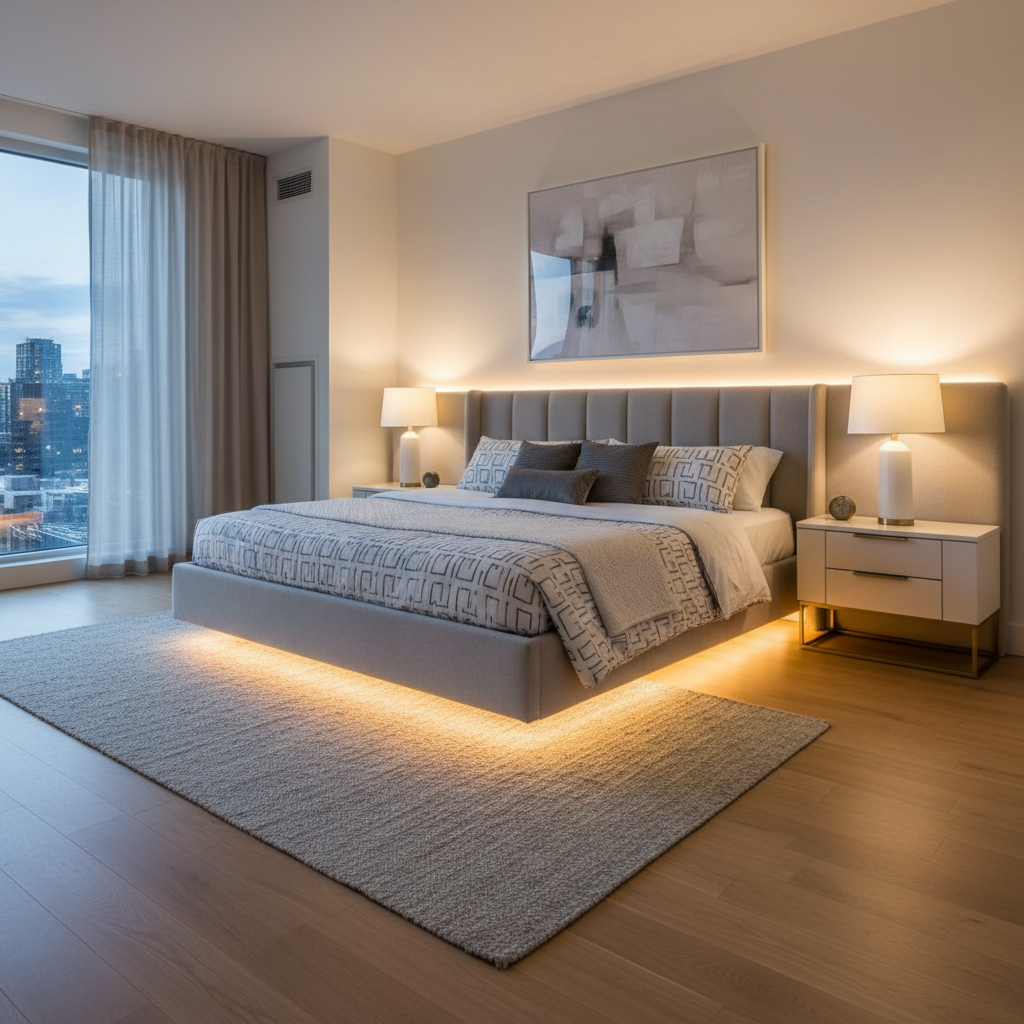
One more thing before you buy: bedroom LEDs are less about maximum lumens and more about consistent color, smooth dimming, and placement. Those three decide whether your room feels like a calm hotel or a noisy gaming setup.
What “best” means for bedroom LED strip lights
The best choice depends on what you want the lights to do when you’re actually living in the room, reading, getting ready, winding down, or just wanting the space to look more intentional.
- Comfortable light: warm white (around 2700K–3000K) tends to feel relaxing; tunable white helps if you also work at your desk.
- Even glow: higher LED density reduces “dotted” hotspots, especially on bare walls and ceilings.
- Reliable control: a simple remote can beat a flaky app; smart control is great when it works, annoying when it lags.
- Clean install: corners, cable routing, and diffuser channels decide whether it looks built-in.
- Safety basics: reputable power supplies, reasonable heat, and no sketchy wiring in soft furniture areas.
According to UL Solutions, using certified electrical products helps reduce fire and shock risks, and that matters when strips run near bedding, curtains, and wood furniture.
Quick comparison table: pick a strip type in 60 seconds
If you’re shopping for the best led strip lights for bedroom décor, start here. This table is intentionally practical, it’s about outcomes, not jargon.
| Type | Best for | What to watch | Typical vibe |
|---|---|---|---|
| Warm white | Relaxing bedroom glow | No color changing, but often best quality/price | Cozy, hotel-like |
| Tunable white | Bedroom + reading/desk | Check dimming range and minimum brightness | Day-to-night flexible |
| RGB | Accent color, fun scenes | White mode can look bluish or weak | Party/game aesthetic |
| RGBW / RGBCCT | Color + real white | Costs more, but white quality improves a lot | Decor + functional |
| Addressable (pixel) | Animated effects | More setup complexity, not always great for calm bedrooms | Dynamic, attention-grabbing |
Common reasons bedroom LED strips disappoint
Most “these look cheap” outcomes trace back to a few predictable mismatches. Fix the mismatch, and the room changes fast.
- Not enough brightness for the surface: strips look brighter in a small demo photo than across a full wall line.
- Low LED density: you see individual dots reflected on paint, mirrors, or glossy furniture.
- Bad adhesive or dirty surface: bedrooms collect dust and fabric lint, and adhesive hates that.
- Voltage drop on longer runs: the far end dims or shifts color, especially on longer 16.4ft+ runs.
- Wrong “white”: basic RGB strips often produce a harsh white that feels cold at night.
- Control friction: the app needs an account, Wi‑Fi pairing fails, or the remote has a tiny range.
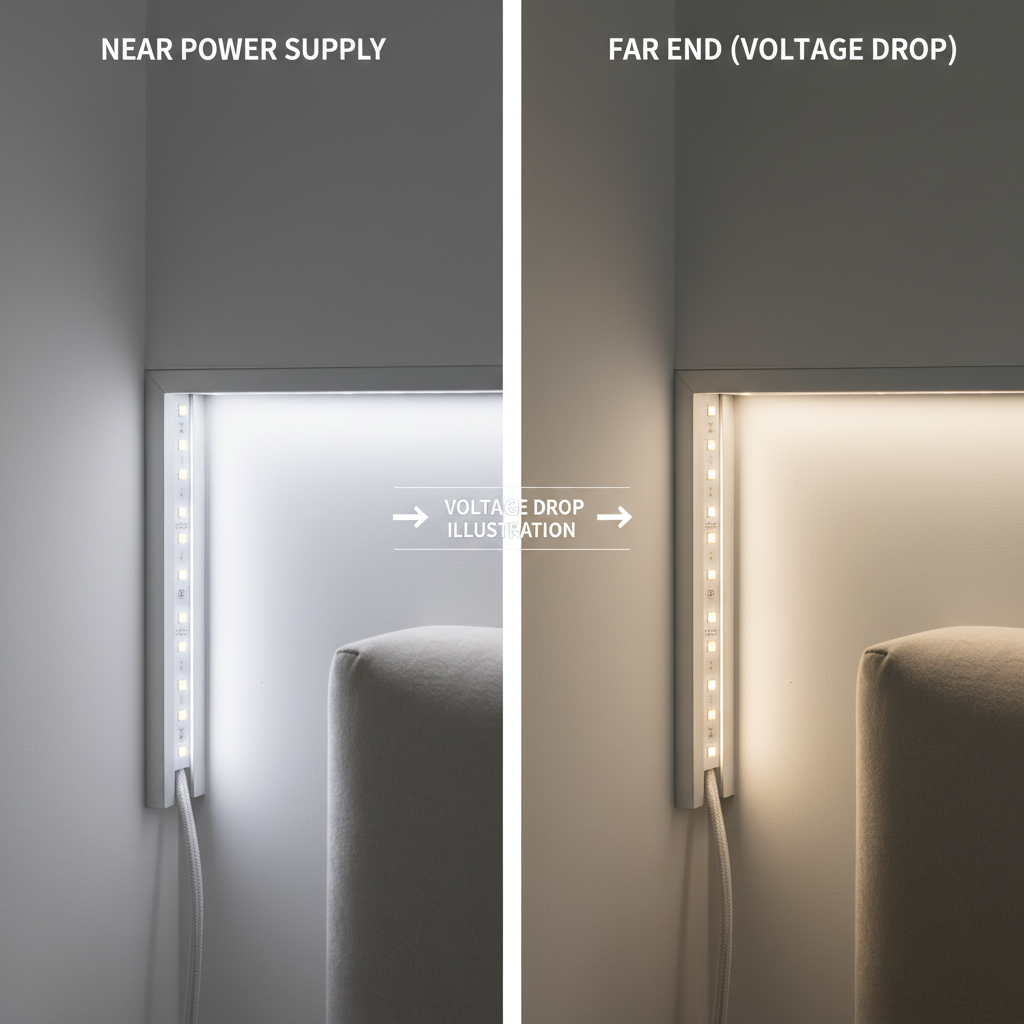
If you’ve been burned before, your next purchase should prioritize power design and white-light quality over extra effects you won’t use after the first week.
A quick self-check: what should you buy for your room?
Use this like a filter before you start comparing brands. It saves money because it cuts options down to the few that fit your actual use.
1) What’s the main job?
- Sleep-friendly ambiance: warm white or RGBCCT with warm presets.
- Reading + relaxing: tunable white (or RGBCCT) so you can go brighter/cooler earlier, warmer later.
- Decor scenes for photos: RGBW/RGBCCT so skin tones don’t look strange in “white” mode.
2) Where will it go?
- Behind headboard: prioritize even glow; diffuser channels help a lot.
- Ceiling perimeter: higher brightness and better diffusion reduce spotting on the ceiling line.
- Under bed: lower brightness can still look great; aim for a soft wash on the floor.
3) How long is the run?
- One wall or a headboard outline: often simple 12V/24V kits work fine.
- Whole-room perimeter: plan for longer length, better power injection, or multiple shorter runs.
When people search best led strip lights for bedroom, they often assume “one roll fits all,” but room perimeter installs behave very differently from headboard accents.
What to look for before you click “Buy”
You don’t need to memorize specs, but a few checks prevent the most common quality problems.
- Color quality for white light: if you care about white, favor RGBW or RGBCCT over basic RGB. For white-only strips, check that the color temperature matches your vibe.
- Brightness and density: higher LED density usually means a smoother line, which reads “premium” in a bedroom.
- 24V over 12V for longer runs: many setups get more consistent brightness with 24V, especially around a room.
- Power supply quality: look for reputable safety certification marks and an adapter rated for the strip’s wattage with some headroom.
- Control options: remote + app combo is often the sweet spot; if Wi‑Fi annoys you, consider Bluetooth control.
- Cut points and connectors: easier cutting matters if you have corners, a bed frame, or shelves that don’t match the roll length.
According to the U.S. Consumer Product Safety Commission (CPSC), many home electrical incidents tie back to misuse or unsafe products, so it’s worth treating the power side as part of “decor,” not an afterthought.
Installation that looks built-in (even if you rent)
Good placement does more than fancy features. The goal is to hide the strip, show the glow, and keep cables from becoming “visual noise.”
Step-by-step approach
- Test before you peel: plug in, check colors, dimming, and remote range.
- Clean the surface: most adhesives stick better after wiping with isopropyl alcohol and letting it fully dry.
- Plan corners: avoid sharp bends; use corner connectors or run a gentle curve where possible.
- Hide the source: place strips behind a lip, bed frame edge, crown molding, or in an aluminum channel.
- Manage the cable: route power toward an outlet you can live with, then use paint-matching clips or raceways.
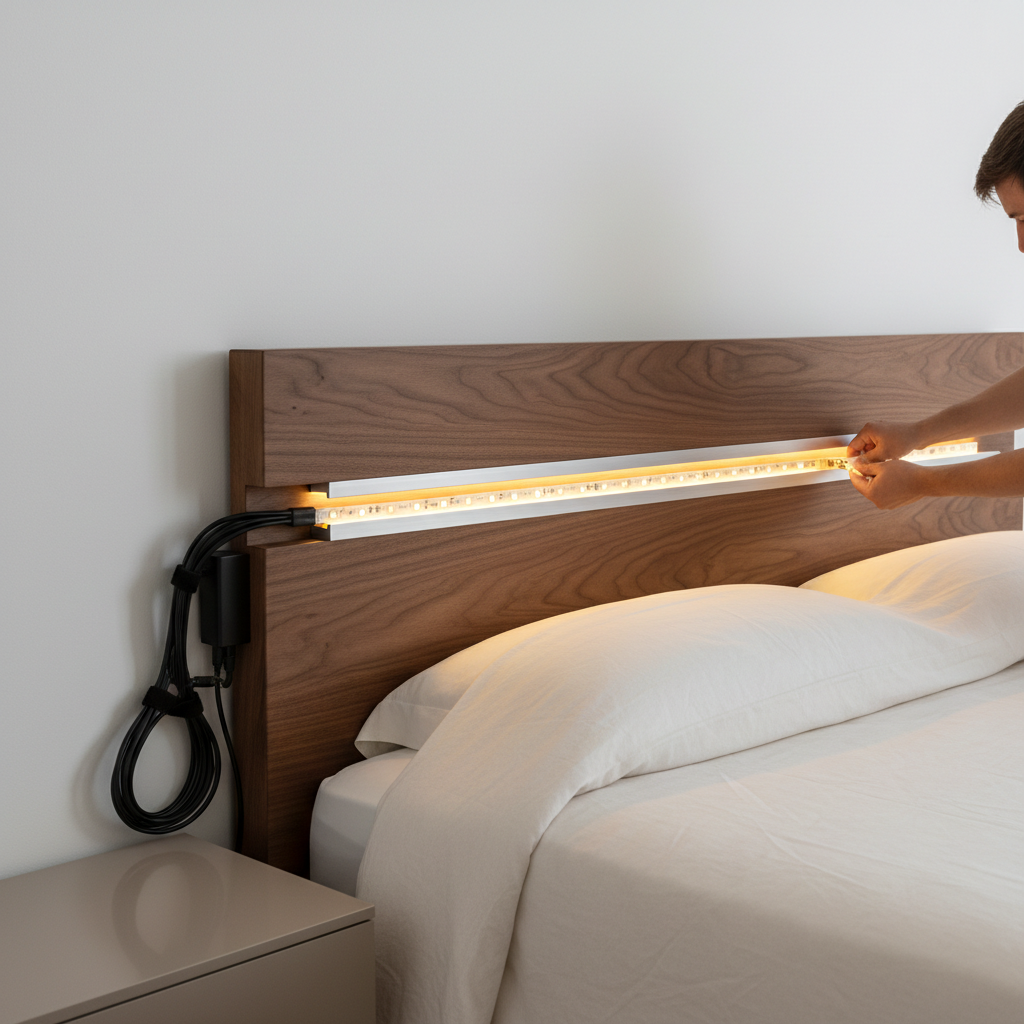
Key takeaway: if you want that smooth “floating” look, a diffuser channel and smart placement usually beat buying a brighter strip.
Safety and comfort notes (worth 2 minutes)
Bedroom installs sit near fabrics and places you touch daily, so it’s smart to be a little conservative. If anything feels uncertain, asking an electrician is a reasonable move.
- Heat: strips can warm up; avoid trapping them under thick fabric or inside tight, unventilated spaces.
- Power supply: don’t overload an adapter, and don’t mix random adapters unless specs match.
- Extension cords: use appropriately rated cords; if you find yourself daisy-chaining, rethink the outlet plan.
- Sleep sensitivity: bright blue light late at night can affect some people’s sleep; warm dim settings often feel easier on the eyes.
According to the National Sleep Foundation, light exposure timing can influence sleep for many people, so treating LED strips as “mood lighting” at night is a practical habit.
Practical room-decor recipes (easy wins)
If you want results without overthinking, these setups tend to work in many bedrooms.
- Headboard halo: warm white or RGBCCT, mounted behind the headboard edge for indirect glow.
- Under-bed float: softer brightness, hidden strip facing inward so you see light on the floor, not the LEDs.
- Ceiling perimeter wash: higher density, diffuser if possible, and careful corner planning to prevent dark gaps.
- Shelf accents: shorter runs under shelves, tuned warm for décor; avoid direct line-of-sight to the diodes.
For many rooms, the best led strip lights for bedroom décor end up being the ones you can keep on for hours without noticing them, until you turn them off and the room feels flat.
Conclusion: how to choose without getting stuck
If your priority is a calm, good-looking bedroom, favor white-light quality, smooth dimming, and an install plan over flashy effects. Start by choosing the right strip type (warm white, tunable white, RGBW/RGBCCT), then match length and voltage to your run, and finally spend a little extra attention on diffusion and cable routing.
If you want a simple next step, measure your placement path tonight, decide whether you want “relax only” or “relax + read,” then buy a kit that fits that decision instead of shopping by star ratings alone.
FAQ
What are the best LED strip lights for bedroom ambiance?
Warm white strips are a safe bet for ambiance, and RGBCCT is a strong option if you also want color scenes without sacrificing a comfortable warm preset.
Are RGB strips good enough if I want white light too?
Sometimes, but many RGB-only strips produce a cooler, less natural white. If white matters daily, RGBW or RGBCCT usually feels better in a bedroom.
How bright should bedroom LED strips be?
It depends on placement and how reflective the surfaces are. Indirect installs often look better with moderate brightness and good diffusion than with maximum output.
Why is my LED strip dim at the end?
That’s often voltage drop on longer runs. Shorter runs, 24V strips, thicker wiring, or adding power injection can help, but wiring changes may be worth a professional check.
How do I keep LED strips from falling off the wall?
Clean the surface well, avoid dusty or textured paint when possible, and consider mounting in channels or using mounting clips for long-term stability.
Do LED strip lights use a lot of electricity?
Many setups are fairly efficient, but total use depends on wattage per foot and how long you run them. Check the kit’s power rating and your usage pattern.
Can I put LED strips under my bed safely?
In many cases yes, if the strip and power supply are reputable and the install avoids pinched cables and trapped heat. If you’re unsure about routing near moving frames, a quick consultation can prevent problems.
If you’re decorating a bedroom and want the glow to look intentional instead of “stuck on,” it can help to share your room size, where you want the light line, and whether you care more about warm white or color scenes, then you can narrow to a setup that fits without buying twice.