
Best budget wireless earbuds for running are the ones you forget you’re wearing, because they stay put, handle sweat, and keep calls and music usable without pushing you into premium pricing.
If you’ve ever had an earbud pop out mid-interval, or you’ve had “water resistant” buds die after a few humid runs, you already know why this category is tricky. Running adds sweat, wind noise, and constant impact, and cheap earbuds often cut corners exactly where runners feel it.

This guide focuses on practical buying criteria and real-world tradeoffs, not hype. You’ll get a quick self-check, a comparison table of what matters most, and setup tips that can make even inexpensive earbuds perform better on the move.
What matters most for running (and where budget earbuds usually fail)
For sports use, sound quality is nice, but it’s rarely the limiting factor. Fit, stability, and sweat handling decide whether your run feels smooth or annoying.
- Fit and stability: Ear tips and ear “wings” matter more than driver size. A slightly worse-sounding earbud that stays sealed beats a better-sounding one that breaks seal every few minutes.
- Water and sweat resistance: Look for an IP rating (like IPX4, IPX5). Without it, you’re guessing. Note that “water resistant” wording varies by brand.
- Wind noise and call quality: Outdoor calls can get rough. Many budget models boost treble, which can make wind sound harsher.
- Controls you can actually use: Tiny touch panels can misfire when you’re sweaty. Physical buttons can be easier, but sometimes add pressure in-ear.
- Latency and connection stability: Gym TVs, busy sidewalks, and a phone in an armband can stress Bluetooth. Stability beats codec buzzwords for most runners.
According to Federal Trade Commission (FTC), marketing claims should be truthful and not misleading, which is worth remembering when you see vague durability promises without an IP rating or warranty detail.
Quick self-check: which “runner profile” are you?
If you buy based on your actual runs, shopping gets simpler. Pick the closest match.
- Treadmill or indoor runner: Prioritize comfort, battery, and easy controls. ANC can help, but isn’t mandatory.
- Outdoor road runner: Prioritize stability, wind handling, and awareness features. In many situations, hearing traffic is safer than strong noise canceling.
- Trail runner: Prioritize secure fit and sweat/dust resistance. A tighter seal helps with impact bounce.
- HIIT + running mix: Prioritize wings/hooks and reliable touch or button controls. You’ll be moving fast and changing directions.
If you’re unsure, default to stability plus an IP rating. Most “I hate these earbuds” complaints come back to fit or sweat, not audio tuning.
Comparison table: budget features that actually change your run
Instead of chasing one “best” model, use this table to balance priorities. It’s a cheat sheet for reading product listings and reviews.
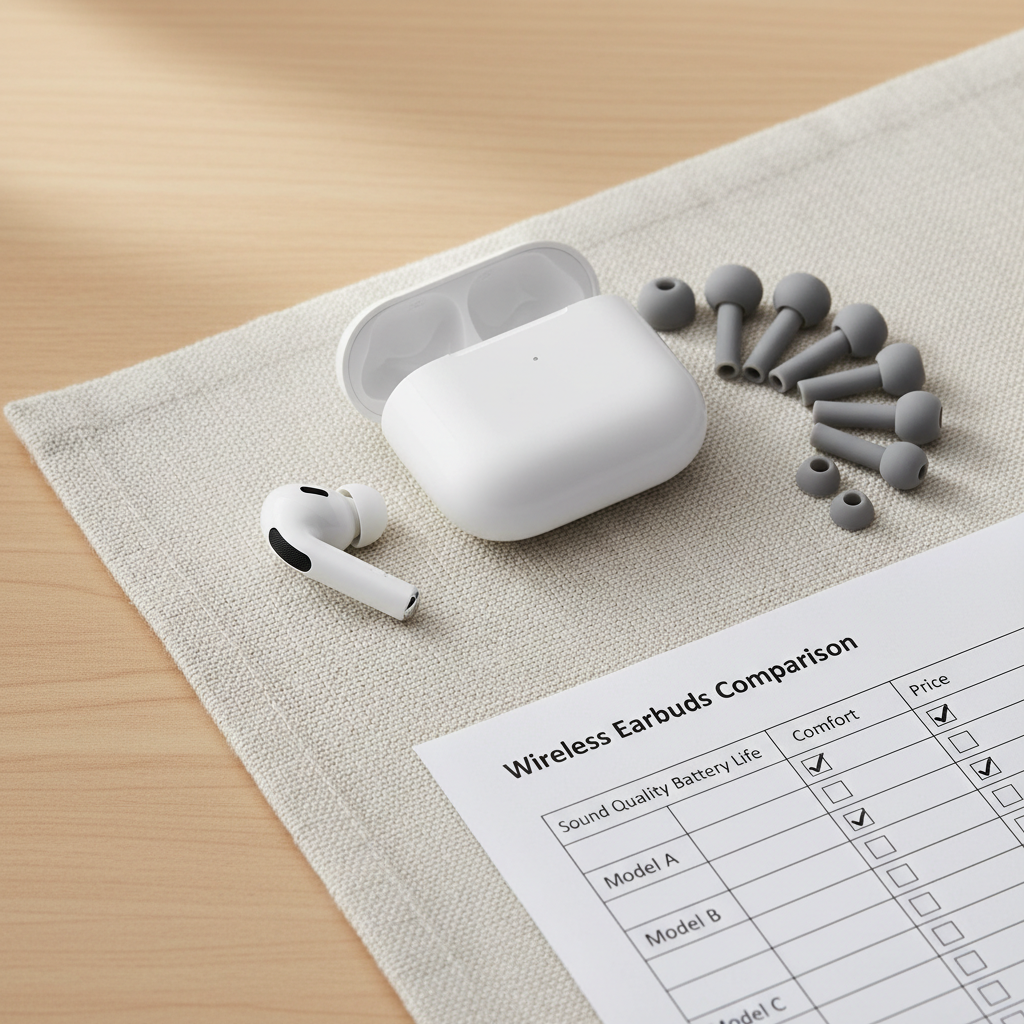
| Feature | What to look for | Why it matters for running | Common budget “gotcha” |
|---|---|---|---|
| IP rating | IPX4 minimum, higher if you sweat a lot | Helps manage sweat/rain risk | Vague “sweatproof” wording, no rating listed |
| Stability aids | Wing tips, multiple tip sizes | Reduces dropouts from seal breaks | Only one tip size included |
| Transparency/awareness | Adjustable ambient mode | Better situational awareness outdoors | Mode exists but sounds hissy or unnatural |
| Battery (realistic) | 5+ hours per charge for long runs | Less mid-run charging anxiety | ANC or loud volume cuts runtime sharply |
| Controls | Lockable touch, or well-tuned buttons | Fewer accidental pauses/skips | Touch triggers with sweat/hats |
| Fit design | Shallow nozzle if you dislike pressure | Comfort over 30–60 minutes | “One-shape-fits-all” shells |
How to pick the right pair without overspending
Most runners can narrow it down fast with a few rules that avoid the typical budget traps.
Start with fit tools, not brand names
When you’re shopping for the best budget wireless earbuds for running, check what comes in the box: tip sizes, wings, and any stability pieces. More fit options usually beat a slightly nicer spec sheet.
- Prefer 3+ ear tip sizes if possible, it’s the cheapest way to improve seal and bass.
- Pick wings/hooks if your earbuds often loosen with sweat, hair, or hats.
- Be cautious with “open-fit” buds if you want strong bass, they can be great for awareness but often sound thinner.
Use the IP rating as your filter
For most runners, IPX4 is the floor. If you run in heavy humidity, get caught in rain, or sweat heavily, you may want higher. Even then, no rating makes cleaning and longevity a gamble.
According to International Electrotechnical Commission (IEC), the IP code system is the standard way products describe ingress protection against water and dust, which makes it more reliable than “sweatproof” marketing language.
Don’t overpay for ANC if you mostly run outdoors
ANC can feel great on a treadmill or plane, but outdoors it can reduce awareness. Many earbuds offer transparency mode, yet budget implementations vary a lot, some sound artificial, some add hiss.
- If you run near traffic, awareness features can be the smarter “upgrade” than stronger noise canceling.
- If you mainly run indoors, ANC becomes more useful, and wind noise matters less.
Make budget earbuds work better: setup tips runners skip
Before you return a pair, try these adjustments. They solve a surprising share of “these keep falling out” and “why do they sound bad outside” issues.

- Try one size up for the tip if the seal breaks when you sweat. A better seal usually reduces wind noise and improves bass.
- Twist-to-lock insertion: insert, rotate slightly back, then release. Many “secure fit” shells are designed for that motion.
- Swap to foam tips if compatible. Foam can improve seal and stability, but it may wear faster and can feel warmer.
- Move your phone position. If you use an armband, try switching sides or placing the phone higher, Bluetooth can be picky in crowded RF areas.
- Set a safer volume ceiling. Many phones let you limit max volume, which helps prevent accidentally blasting audio mid-run.
For safety, if you run outdoors, consider keeping one earbud slightly lower in volume or using awareness mode. Local laws and personal risk tolerance vary, and if you’re unsure, it can be worth asking a coach or medical professional for guidance.
Common mistakes when buying cheap running earbuds
These are the patterns that waste money, because you end up “upgrading” twice.
- Buying on driver size alone. Bigger numbers don’t guarantee better sound, and they say nothing about fit.
- Ignoring tip options. If the listing doesn’t mention tip sizes, assume it’s minimal.
- Assuming the case rating equals earbud rating. Water resistance usually applies to the earbuds, not the charging case.
- Expecting premium mic performance outdoors. Wind + traffic is hard even for expensive sets, so keep expectations realistic.
- Cranking ANC to fix wind. Wind noise often needs a better seal, different fit, or a hat/headband buffer more than stronger ANC.
Key takeaways and a practical conclusion
If you want the best budget wireless earbuds for running, shop like a runner, not like an audiophile. Secure fit + an IP rating tends to beat fancy feature lists, and a few setup tweaks can turn “okay” earbuds into reliable training gear.
Action steps: pick two or three models that clearly list IP rating and include multiple tip sizes, then commit to a short fit test on a real run, not just walking around your living room.
FAQ
What IP rating is “enough” for running earbuds?
IPX4 is a common minimum for sweat and light rain, and it’s a sensible baseline for most runners. If you sweat heavily or run in frequent rain, higher ratings may reduce worry, but they still don’t make earbuds invincible.
Are cheap wireless earbuds safe to use for road running?
They can be, but it depends on how you use them. Many runners prefer awareness or transparency modes, or keep volume lower, because hearing traffic cues can matter. If you’re unsure about safe practices for your routes, it’s reasonable to ask a coach or healthcare professional.
Why do my earbuds fall out only when I start sweating?
Sweat reduces friction and often breaks the seal. A slightly larger tip, wings, or foam tips can help. Also check insertion technique, many buds need a small twist to lock.
Is ANC worth it on a budget for workouts?
Sometimes, mainly for indoor cardio where steady machine noise is the problem. Outdoors, ANC can be less useful and may reduce awareness, while also cutting battery life.
How can I reduce wind noise without buying new earbuds?
Improve seal with different tips, lower volume a bit, and try a headband or hat that blocks direct wind. If your earbuds have an EQ, reducing the highest treble can also make wind less sharp.
Do I need ear hooks for running?
Not always. If your ears hold in-ear tips well and you run at steady pace, you may be fine without hooks. If you do sprints, trail running, or HIIT moves, hooks or wings often make life easier.
What’s a realistic battery expectation for budget earbuds?
Many budget models land around 5–8 hours per charge on paper, but loud volume and ANC can reduce that. If you do long runs, prioritize stable single-charge runtime over huge “case total” numbers.
If you’re trying to narrow choices quickly, it can help to list your top two non-negotiables, usually fit stability and sweat resistance, then compare only models that clearly meet them, it’s the simplest way to avoid buying twice.